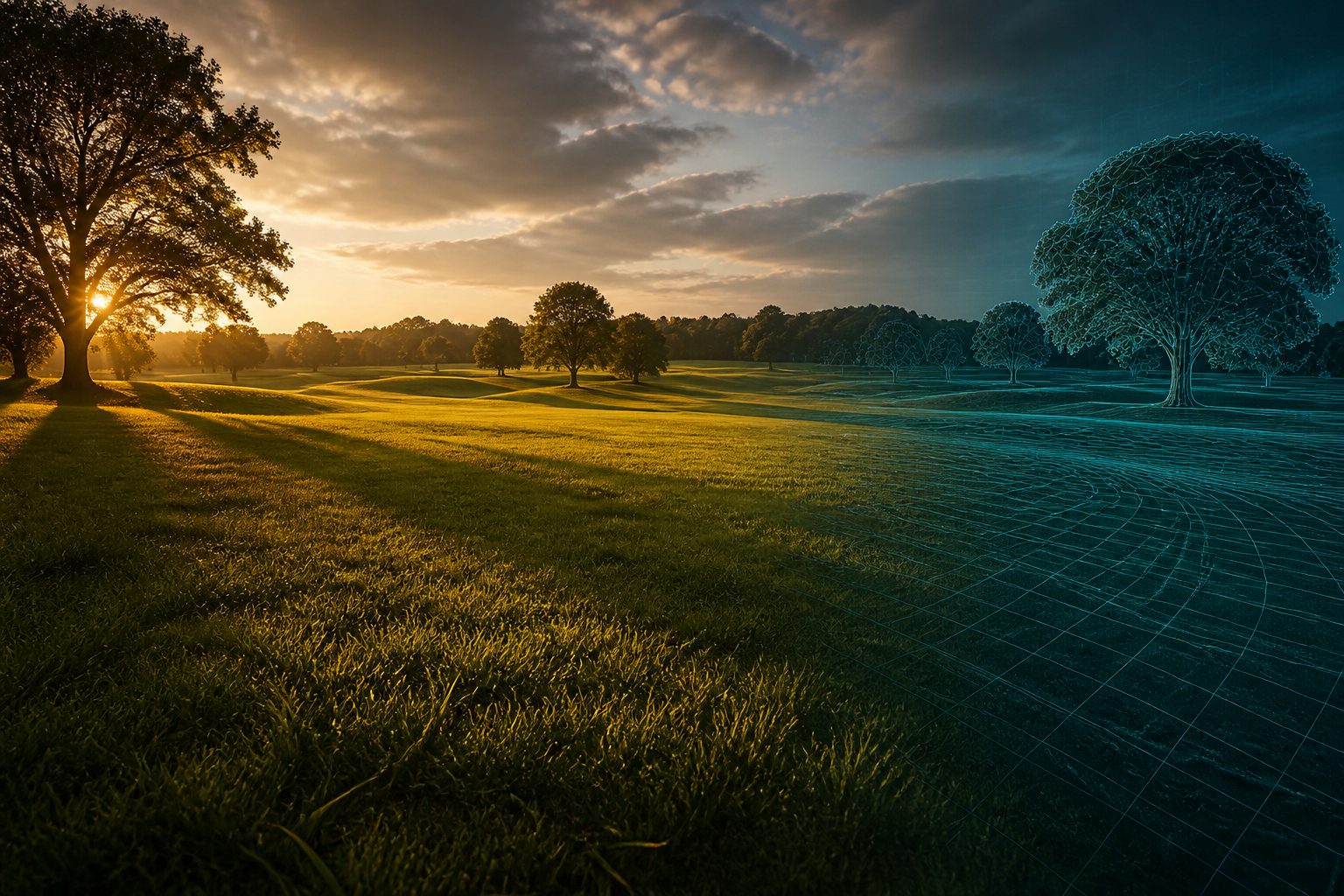
A wide outdoor working landscape at low sun, the right half of the frame rendered as a simulated reconstruction of the left

Autonomy for machines that do real work

The work is already there. The robots are not.

Outdoor labour is short of people and long on budget. What has been missing is a way to build the machines fast and cheaply enough to meet it — so that is what we built first.

Stage one shipping · stage two in design · both developed in simulation

What we build

Two stages. The brain, then the machine.

We start with outdoor working machines: the work with the clearest unmet demand, and the hardest conditions to do it in. Both stages have to survive manufacturing tolerance, cost-down, service and warranty — not a demonstration on a good day.

Stage 01 Shipping

The brain module

A plug-in module that makes a machine a person drives into one that drives itself. The installed base becomes the fleet, so volume does not wait on new hardware.

Stage 02 In design

Our own robot

A purpose-built working machine with a tool ecosystem, specified and verified in simulation before anything is fabricated.

Stage one

It fits the machine you already own.

Sensing, compute and an independent safety chain in a single module.

  • Reads the site on arrival, sets its own boundary, plans its route, finishes the job. Empty seat.
  • No survey, no buried wire, no route drawn in advance.
  • Nothing about the host machine is modified.
  • One architecture from ride-on mowers to golf carts, utility vehicles and tractors — only the actuation layer differs.
See the mower product ↗
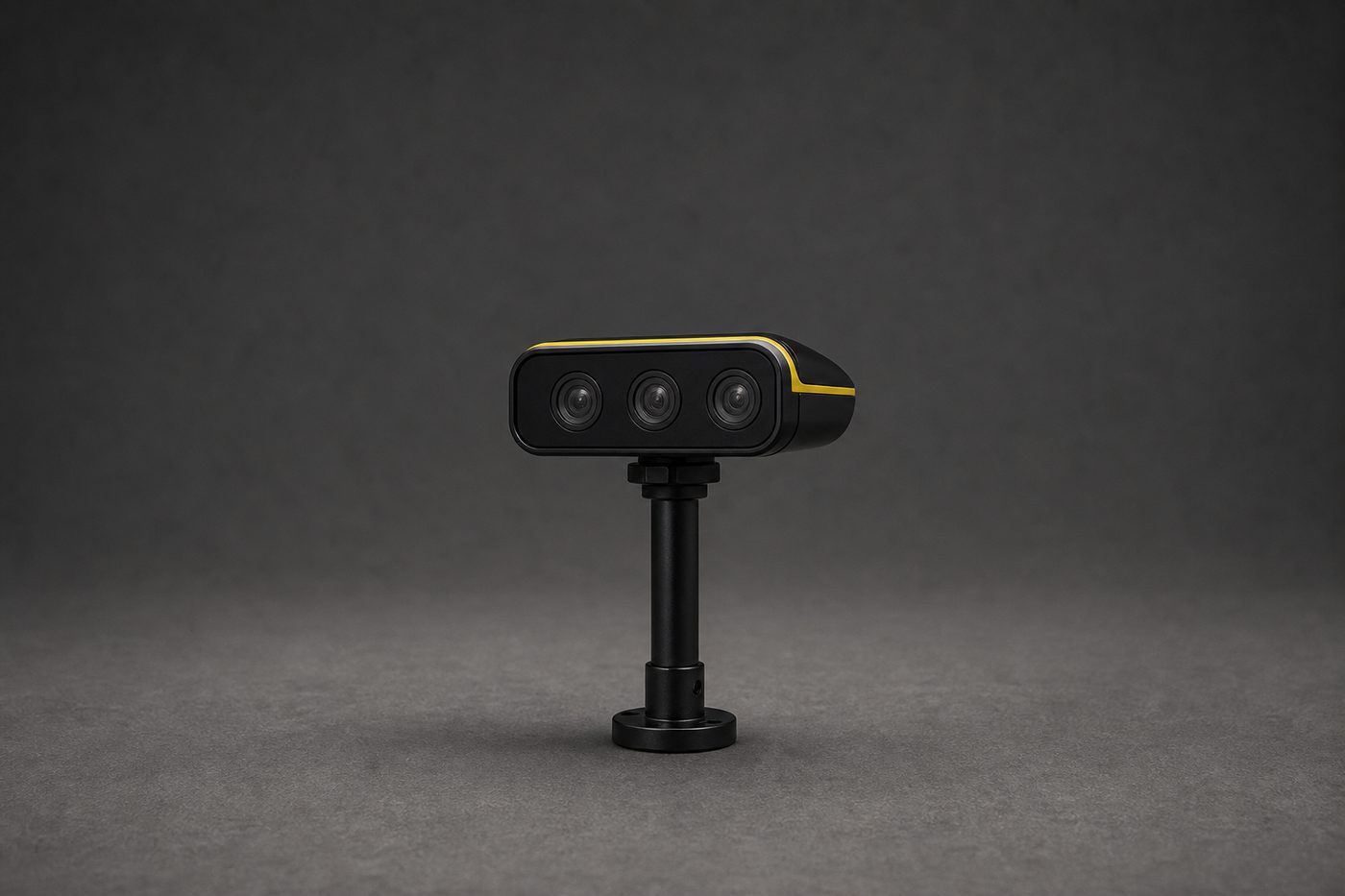
The retrofit autonomy module: a compact trinocular camera and compute unit on a short mast bracket
The autonomy module Generated visualisation
In the field

A whole course, running as one system.

Developed with our manufacturing partner.

A golf course at dawn with an autonomous mower on the fairway, a driverless cart on the path, and service robots at charging docks beside a maintenance building
Full-scene autonomous operation, golf Generated visualisation
  • Autonomous mowers, carts, delivery, washing and charging robots across an entire golf course.
  • The most complete outdoor deployment the stack has had, and where much of the platform came from.
  • Our stack also runs inside a vehicle line that is first worldwide by volume in its segment — roughly half the global market, and around 800,000 machines delivered.
Stage two

Machines of our own.

Designed inside the loop, before anything is fabricated.

  • A purpose-built working robot with a tool ecosystem.
  • The first machine whose design is settled by simulation rather than discovered on a prototype.
  • Then the same brain in warehouse, service and domestic machines. The world model changes; the loop does not.
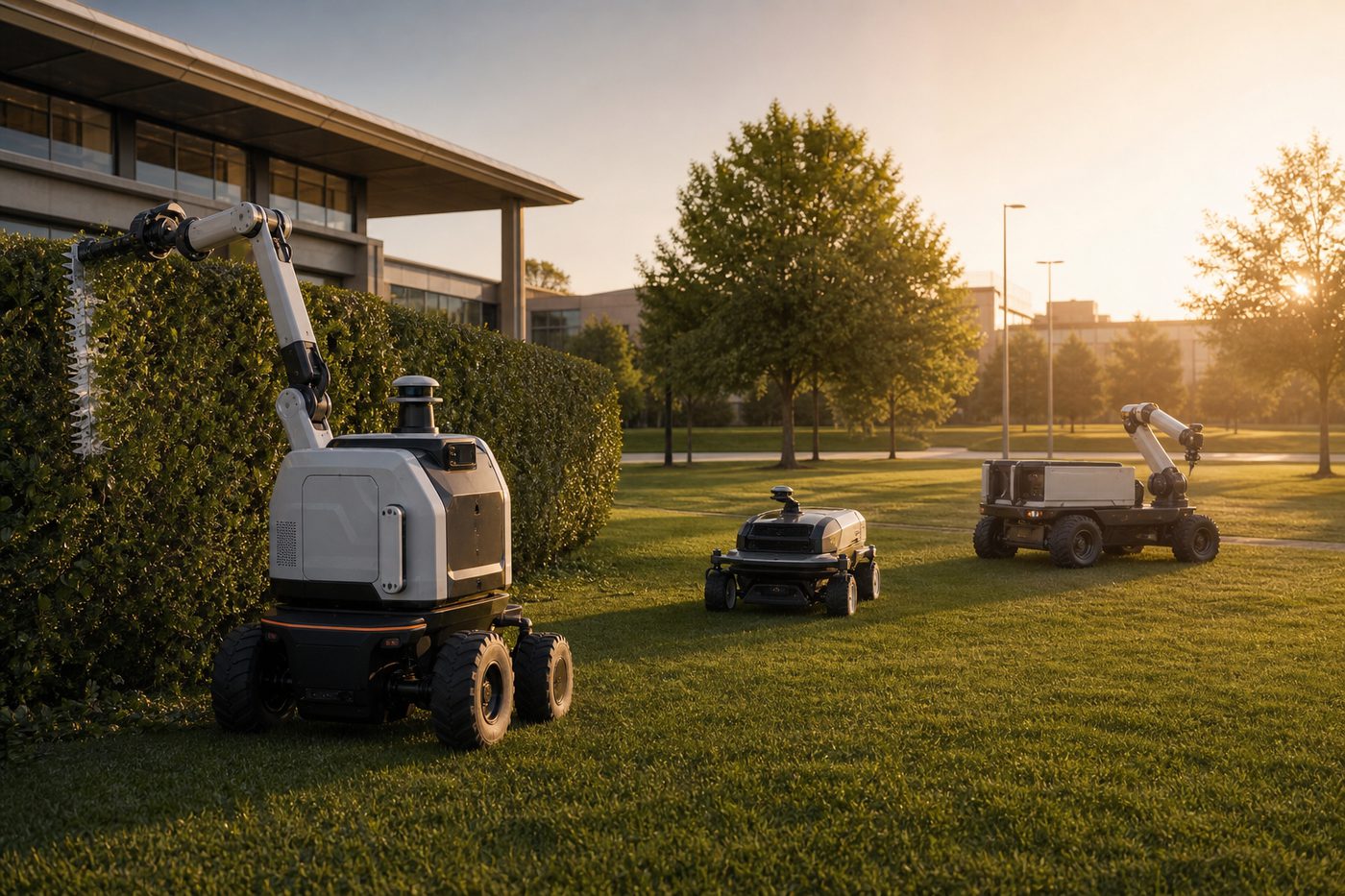
Concept render of a four-wheel-steered outdoor working robot with a sensor mast and an articulated arm carrying an interchangeable brush tool, working along a fence line
Platform concept Generated visualisation

The bottleneck

Robots are where chips were before EDA.

A robot's bill of materials falls every year. Its development cost does not. That is what keeps robots out of volume, and it is the problem we actually work on.

Every robot is a prototype

Perception, control and safety get rebuilt for each machine. Almost nothing carries over.

Testing needs the real world

Failures are found by driving a physical machine into a physical place. Slow, unrepeatable, gated by weather and season.

Volume is where it breaks

Manufacturing tolerance, cost-down and warranty all change the machine. Every change reopens the testing.

The precedent

Chips solved this. Cars solved this.

  • Silicon got cheap when design moved into simulation: verify first, fabricate once.
  • Automotive followed, with closed-loop validation before the hardware exists.
  • Robotics has no equivalent.

That is what we build.

Where it applies

Any robot that has to work in a place.

The loop is domain-agnostic. Only the world model changes.

Outdoor working machines

First. The hardest case.

Warehouse & logistics

Structured, dense, high duty cycle.

Service & inspection

Mixed indoor and outdoor, people present.

Domestic & indoor

Cluttered, unmapped, endlessly varied.

How we build it

One loop. Capture to machine, and back.

Development moves into simulation. Each stage produces exactly what the next consumes, and machines in the field feed the first stage again.

  1. 01 Capture A phone or drone pass over a real site.
  2. 02 Cousins One layout becomes unlimited worlds.
  3. 03 Train & verify Closed-loop learning against work that changes the scene.
  4. 04 Configure The whole onboard system, not just the policy.
  5. 05 Deploy Same specification drives the real machine.
Field captures return as new worlds
Why the hardest case

We built it for ground that will not hold still.

The ground moves

Soil deforms, grass compresses, slopes change what the machine can do.

The light never repeats

Hour, season and weather rewrite every image the robot sees.

The work rewrites the scene

The machine changes the place it is working, then has to perceive the change.

No map survives

Sites grow, get cluttered and get rearranged between visits.

Cousins

One clip becomes unlimited worlds.

A phone walked across a site, or a drone flown over one. That is the entire input.

  • A twin reproduces one place. A policy trained on it learns that place, and the next site defeats it.
  • A cousin keeps the structure and re-rolls everything else: species, materials, light, weather, growth.
  • The family transfers. No single member does.

N cousins

from one capture

Scene count beats scene fidelity.

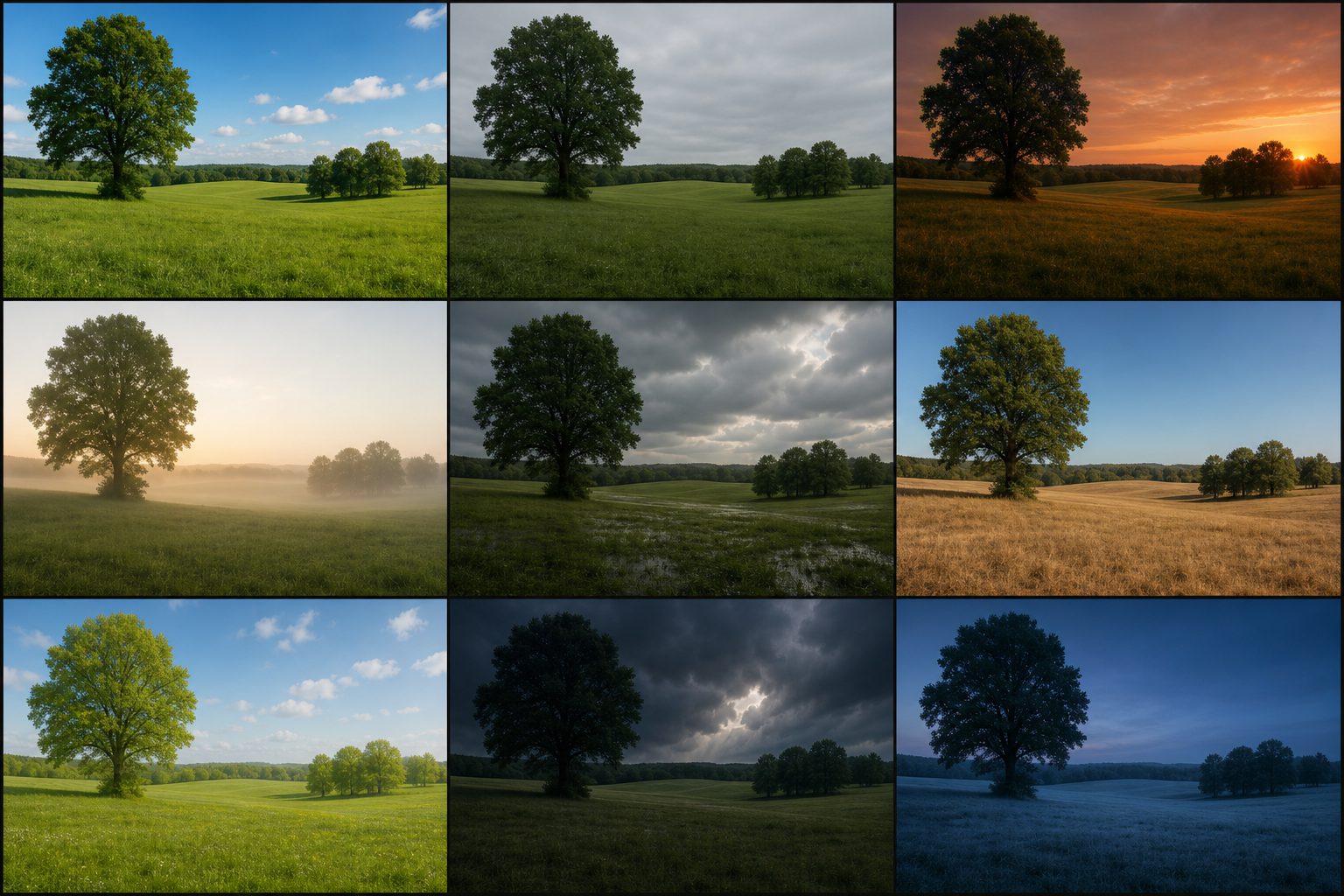
Nine variations of the same outdoor scene shown as a grid, each with different vegetation, ground cover and lighting but identical terrain contours
One captured layout, re-rolled Generated visualisation
Work canvas

The world remembers what the machine did.

Working robots change the scene they are looking at. They have to see what they have already done — and no navigation simulator represents that at all.

  • A world-aligned record of work state runs through the simulation.
  • The machine edits it. The cameras see it. The reward reads it.
  • One mechanism, different channels — so the second task is not a second system.
Cut height & direction
Mowing, striping, verge work
Trimmed shell
Hedging, edging, pruning
Debris density
Clearance, sweeping
Cleared area & object state
Collection, pick-and-place, tidying
Aerial view of a large lawn half cut in clean stripes, the boundary between worked and unworked grass sharply visible
Work state is visible, so it is learnable Generated visualisation
Train, configure, deploy
A simulated working machine mid-turn on rendered terrain, with its depth, segmentation and surface-normal views shown as insets
One instant, as the machine feels it and sees it Generated visualisation
03

Train & verify

  • Dynamics and photorealistic rendering advance in lockstep.
  • Policies learn inside a predictive model, evaluating outcomes several steps ahead.
  • Sensors modelled by failure mode, not datasheet.
  • Deterministic. A failure becomes a regression test.
04

Configure the whole system

  • Perception, planning, middleware, safety chain and compute budget as one object.
  • The trained network is a fraction of what ships.
  • Change one layer and the loop prices it — success rate, latency, watts.
05

Deploy

  • Simulated and physical machine from one specification, so they cannot drift.
  • Policies verified in the loop have gone onto real robots with no tuning.
  • Layouts that appeared nowhere in training.

Then back again.

Machines in the field return captures of the places they work. Those become new cousins, which train the next policy, which goes back onto the machines. The loop has no end. The loop is the product.

Architecture

Every layer is a seam. Nothing is welded shut.

Four contracts define the system. Each is a place where a different model can be substituted without disturbing anything above it.

The four contracts

SceneSpec

Terrain, surface materials, vegetation, objects, sky — and the region to be worked.

RobotSpec

Kinematics, mass, actuation limits, sensor mounts. One description, two consumers.

ObsSpec

Render passes, sensor channels, noise models. Fixed layout, so a policy cannot tell which engine produced a batch.

WorkStateSpec

What the work did to the world.

Where the seams are

Each layer runs today on a model good enough to train against. Each would rather run on one that is right.

Sensor physics

Today

Render passes with fitted degradation

What can replace it

Physics-based cameras, lidar, radar and thermal — true optical and multispectral behaviour

Environment physics

Today

Contact and terrain models tuned to measured behaviour

What can replace it

Soil and granular mechanics, deformation, thermal, weather, electromagnetics

Machine physics

Today

Rigid multibody dynamics, measured actuation limits

What can replace it

Structural response, drivetrain, motor and battery across the real operating envelope

Embedded software

Today

Hand-built stack, verified as a system

What can replace it

Safety-certified code generation and on-target verification

What it makes possible

Run the loop backwards.

  • Today the loop answers one question: does this system work in this world?
  • It already holds most of what it needs to answer a better one: what machine should exist?
  • Which sensors earn their place. How much torque on that slope, in that soil — and which motor delivers it. Which compute module the stack fits inside, and what that costs in battery.

We have not built this. The architecture was built so that it can be — and the layers it would need are exactly the ones left open.

Who we are

Cambridge, then cars. Now robots.

  1. Where we started

    Founded at the University of Cambridge by scientists and serial founders, out of research on how machines locate themselves and move through the real world.

  2. What we did next

    Selected by one of the world's three largest electronic design automation vendors to build vehicle-level closed-loop simulation inside its pre-silicon verification platform — where driving software and the silicon beneath it are validated together, before either exists in hardware.

  3. Why we are here

    Robotics has the same bottleneck cars had, and none of the tooling. We are moving the experience across, and building the machines with it rather than only selling the method.

Per scenario

Hours → seconds

System-level verification of one driving scenario, end to end.

Scenario coverage

Unlimited

Generated, not driven.

End customers

Top three

Three of the world's largest automakers and their tier-one suppliers.

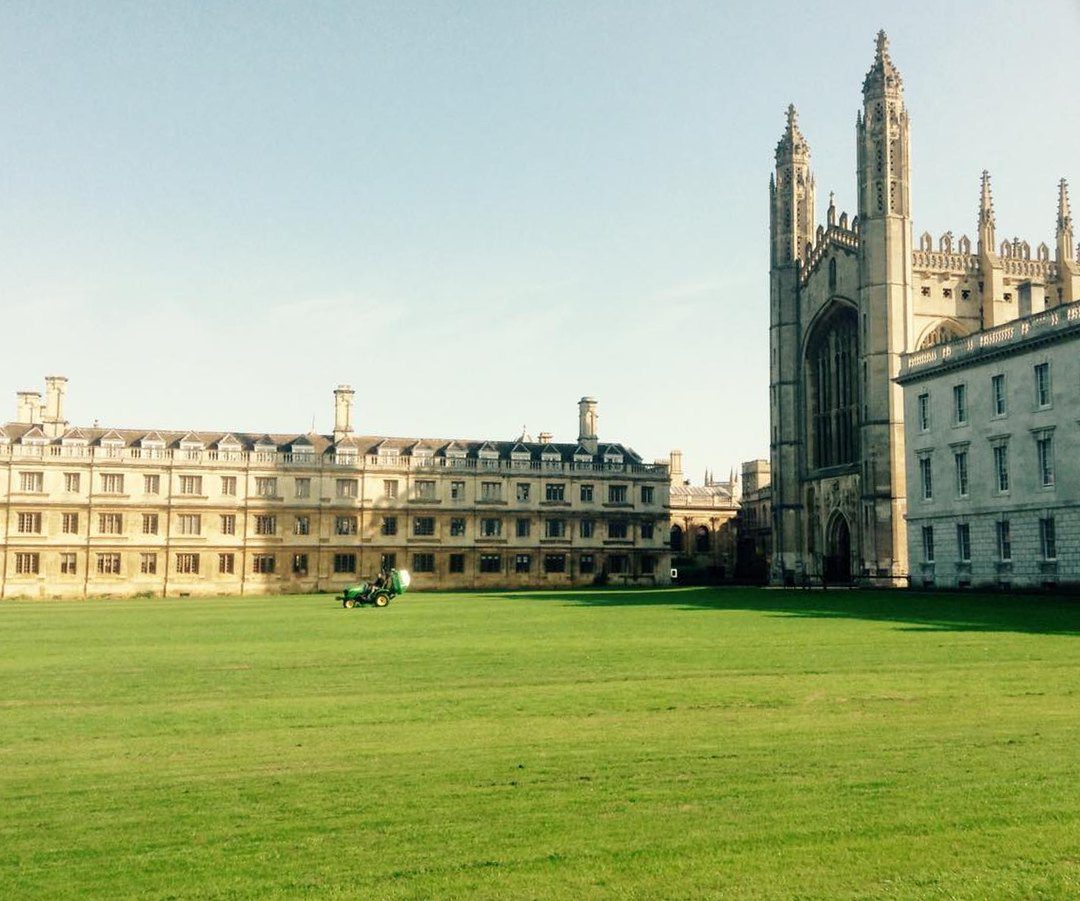
A closely mown college lawn in Cambridge in early morning light
Cambridge
Founded at
University of Cambridge
Team
Scientists and serial founders · Cambridge alumni
Experience
10+ years each in autonomy, robotics and simulation
Backing
Earlier ventures backed by Cambridge University's venture arm and leading deep-tech investors
Research
Published across the major robotics conferences and journals

Contact

Get in touch.

Or write directly — contact@xcrobotics.ai